Conference Date
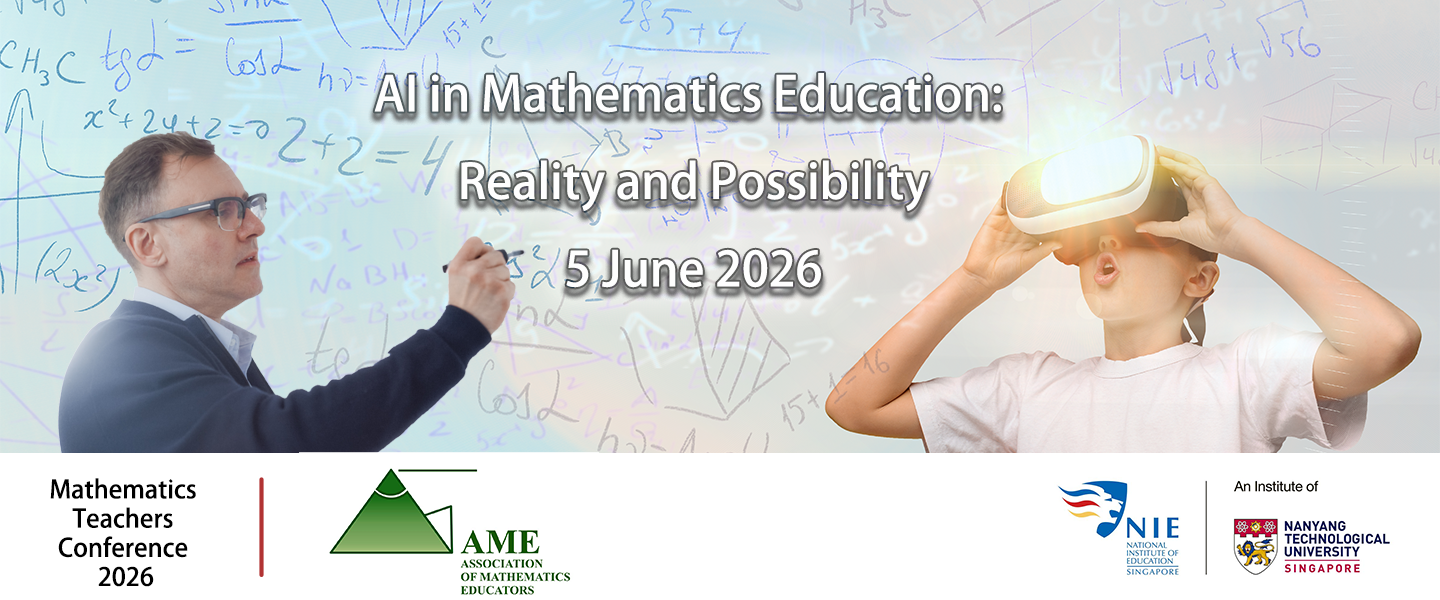
Date : Friday, 5 June 2026
Time : 8am – 5pm
Venue : National Institute of Education, NIE Lecture Theatre 1 (LT1)
Date/Fees
AME Members (Life members or members who have paid the annual subscription fees in 2026) :$150
General Public : $200
Programme
|
Morning Session: 7.45 am – 1.30 pm |
Venue: National Institute of Education |
|
|
7.45 – 8.30 am |
Registration |
|
|
8.30 – 9.00 am |
Opening and Presentation of Excellence in Mathematics Teaching Award |
|
|
9.00 – 10.00 am |
Keynote Lecture 1 (Plenary) |
|
|
10.00 – 10.45 am |
Tea Break |
|
|
Primary (LT2) |
Secondary/Junior College (LT1) |
|
|
10.45 – 12.45 pm |
Keynote Lecture 2 Keynote Lecture 4 |
Keynote Lecture 3 Keynote Lecture 5 |
|
12.45 – 2.30 pm |
Lunch |
|
|
Afternoon Session: 2.30 – 5.30 pm |
Venue: National Institute of Education |
|
|
2.30 – 4.30 pm |
Primary |
Secondary/Junior College |
|
Workshop P1 Workshop P2 Workshop P3 |
Workshop S/JC1 Mdm Wong Lai Fong + Mr Ivan Tan + Mr Andy Chia Workshop S/JC2 Workshop S/JC3 Workshop S/JC4 |
|
|
4.30 – 5.30 pm |
AME Annual General Meeting (TR710) |
|
Conference Fees
AME Members (Life members or members who have paid the annual subscription fees in 2026) :$150
General Public : $200
Cancellation and Refund Policy
Cancellations must be notified in writing to the Conference Secretariat.
- Cancellation before 15 May 2026 will receive a 70% refund of registration fee.
- Cancellation between 15 May 2026 and 04 June 2026 will receive a 50% refund of registration fee.
- There will be no refund for cancellation on the Day of conference.
Keynote Lecturers
Keynote 1:

Prof Chen Wenli (LT1)
Professor
National Institute of Education - Learning Sciences & Assessment
Singapore
Biography
Professor CHEN Wenli is the Associate Dean (Research Support) of Office for Research at the National Institute of Education (NIE), Nanyang Technological University (NTU) Singapore. She is the co-chair of NIE’s Emerging Technologies Strategic Growth Area, and co-chair of AI@NIE. She served as the Head of Learning Sciences and Assessment Academic Department from 2021 to 2025.
Professor CHEN specializes in Computer-Supported Collaborative Learning (CSCL), Multi-Modal Learning Analytics (MMLA), and human-centered AI in Education (AIEd). She is a “go-to expert” for innovative techno-pedagogical design for collaborative learning in authentic classrooms. Her research effectively bridges theory and practice by integrating learning sciences theories, pedagogical expertise, educational technologies, and learning analytics to design, implement, and sustain meaningful collaborative learning environments. By developing theory-informed, evidence-based, technology-transformed learning solutions, Professor Chen’s techno-pedagogical innovations have been successfully implemented across K-12 and higher education settings in Singapore and beyond. Her impactful work has been mentioned in national addresses by Ministers for Education, and featured in major media outlets such as The Straits Times, The Business Times and Lianhe Zaobao.
Abstract
Keynote 2:

Dr. Max Stephens
Faculty of Education
University of Melbourne
Australia
Biography
Professor Max Stephens is an honorary research fellow in the Faculty of Education at the University of Melbourne. He is also currently Patron of the Mathematical Association of Victoria. He has a long interest in curriculum development and assessment in mathematics at The University of Melbourne, and previously in the Ministry of Education. He is the co-author of a chapter on computational and algorithmic thinking in the Springer Encyclopedia of Mathematics Education. At ICME14 in Sydney in 2024, he was a member of the organising team of TSG14 – The teaching and learning of computational thinking – alongside Singapore colleagues, Eng Guan Tay and Weng Kin Ho. Together, they have a book underway with Springer. Max argues that the relationship between natural language coding, using GenAI such as ChatGPT and Deep Seek, and computational thinking is now fundamental to teaching mathematics and to problem solving.
Abstract
Keynote 3: Embedding AI Literacy in School Mathematics: Possibilities and Realities

A/Prof Ng Oi-Lam
Associate Professor
The Chinese University of Hong Kong
Hong Kong
Biography
Oi-Lam Ng is Associate Professor in the Department of Curriculum and Instruction at The Chinese University of Hong Kong. Oi-Lam’s research interests address the new ways of doing, communicating, and representing school mathematics as afforded by technology innovations, e.g. technology-enhanced mathematics learning, constructionist pedagogies, computational thinking education, and multimodality in mathematics discourse. Her interests are rooted in advancing a Papert-inspired conception of “Learning as Making,” and the new opportunities it entails for engaging learners in constructionist practices with emergent technologies (e.g. 3D printing, programming, touchscreen applications, and AI). Her research has been published in top-tier journals in mathematics education, STEM education and educational technology, and she is currently Associate Editor of Digital Experience of Mathematics Education. Her service to the local community includes serving in the Hong Kong Curriculum Development Council–Committee on Mathematics Education.
Abstract
Within mathematics education, AI concepts and processes closely intersect with data practices—collecting, representing, modeling, and interpreting data—and with probabilistic/statistical reasoning, making Data Handling and Probability (DHP) a promising locus for authentic learning within AI contexts. This interdisciplinary interconnection opens up educational opportunities for subject-specific enactments, enabling teachers and students to encounter AI concepts meaningfully through mathematical practices. Recent work in statistics education recasts these practices as “data-ing” (Fielding et al., 2025)—a holistic orientation to reasoning with data that emphasizes iteration, sense-making, and communication, not just procedures—providing a useful lens for integrating AI contexts into topics like DHP. In this talk, I first share my ongoing research on developing students’ computational thinking and AI literacy in school mathematics settings. Then, I discuss and propose a rapidly expanding area of inquiry on incorporating data and AI literacy in strengthening the empirical foundation of AI in mathematics education. In doing so, I aim to contribute timely evidence and foster dialogue on the conceptual, methodological, and practical implications in this emerging area.
Keynote 4: Metacognition as a Critical Competency for Mathematical Learning with AI

Dr. Dawn Ng Kit Ee
Mathematics and Mathematics Education Department
National Institute of Education, Nanyang Technological University
Singapore
Biography
NG Kit Ee Dawn is a senior lecturer with the Mathematics and Mathematics Education Academic Group at the National Institute of Education, Nanyang Technological University, Singapore. She holds a PhD in mathematics education from University of Melbourne, Australia. She has received teaching excellence commendation awards from the National Institute of Education and research awards from Mathematics Education Research Group of Australasia and University of Melbourne. Her research interests include the use of real-world tasks (e.g. problems in real-world contexts, applications and mathematical modelling) in the teaching and learning of mathematics, teacher education on metacognition, and assessment literacy of mathematics teachers. Dr Dawn Ng has published in journals, books and conference proceedings to share her research. She also gives talks and work with schools, teachers, teacher educators, and curriculum planners in Singapore and internationally for teacher professional development.
Abstract
Digital platforms designed for teaching and learning increasingly integrate AI for various purposes. Learners are offered personalized learning pathways, tutoring systems with grading and feedback functions, and inclusive and assessable learning tools. Teachers are supported through learning analytics, content generation, adaptive testing, classroom automation, and environments for learner engagement. Although AI can improve efficiency and responsiveness, it does not automatically result in learner’s reflective thinking. The risks of overreliance, misinformation, and reduced cognitive engagement can be apparent in AI-mediated environments when lessons are not thoughtfully designed and learning not monitored. Metacognition is a critical competency for effective mathematical learning in AI-mediated environments towards self-regulated, self-directed learning. Researchers have argued for explicit instruction to activate students’ metacognition during learning. In an AI-mediated environment, such instruction is crucial for augmenting learning and goal attainment, leveraging on the available affordances. This keynote will discuss the role of metacognition in AI-mediated learning environments and explore how teachers can provide opportunities for activation of students’ metacognition.
Keynote 5: Coding without Coding: Generative AI Support for Introductory Statistics
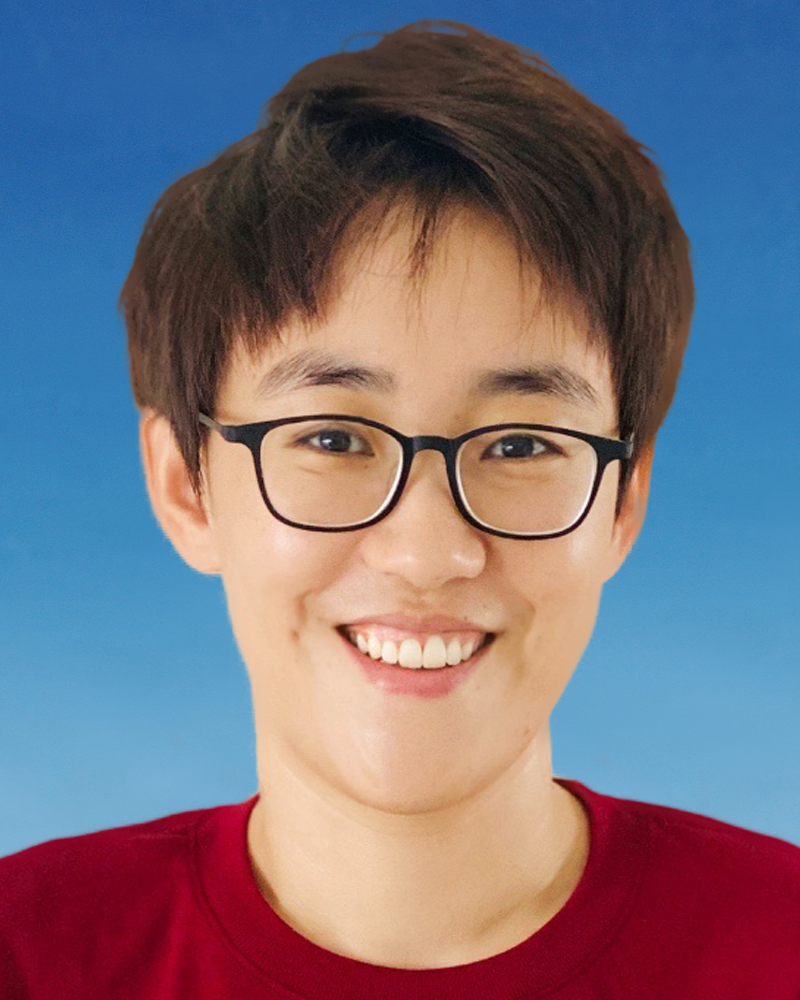
Ast/Prof Zhu Tianming
Mathematics and Mathematics Education Department
National Institute of Education, Nanyang Technological University
Singapore
Biography
Dr. ZHU Tianming received her Ph.D. in Statistics from the National University of Singapore and is currently an Assistant Professor at the National Institute of Education, Nanyang Technological University. Her research focuses on statistical inference for high-dimensional and multivariate functional data, applying AI and data science methods to real-world problems in education, neuroscience, and biomedical research. She is passionate about integrating AI into statistical education, developing innovative teaching approaches, and mentoring students to strengthen analytical and computational skills. She also leads interdisciplinary projects and actively contributes to advancing statistical literacy and AI-driven methodology through collaboration and outreach.
Abstract
In statistics, programming is essential for working with real datasets, particularly for data visualization. Yet in classroom practice, many beginners hit a “syntax wall”, where struggles with code distract them from statistical reasoning and shift focus toward simply fixing errors.
In this talk, I share a classroom implementation of a “coding without coding” approach using generative AI. Students describe their intent in natural language, and the platform generates R or Python code while being deliberately restricted from interpreting results. Even with little or no programming experience, students can create visualizations within minutes, remaining actively engaged in selecting appropriate charts, interpreting outputs, and verifying conclusions. This demonstrates how generative AI can support learning without displacing it, aligning technological possibilities with the realities of teaching and learning in a data-driven world.
Workshops
P1: How can GenAI help teachers of mathematics - Really helpful or sometimes too eager?
Dr. Max Stephens
Faculty of Education
University of Melbourne
Australia
Biography
Professor Max Stephens is an honorary research fellow in the Faculty of Education at the University of Melbourne. He is also currently Patron of the Mathematical Association of Victoria. He has a long interest in curriculum development and assessment in mathematics at The University of Melbourne, and previously in the Ministry of Education. He is the co-author of a chapter on computational and algorithmic thinking in the Springer Encyclopedia of Mathematics Education. At ICME14 in Sydney in 2024, he was a member of the organising team of TSG14 – The teaching and learning of computational thinking – alongside Singapore colleagues, Eng Guan Tay and Weng Kin Ho. Together, they have a book underway with Springer. Max argues that the relationship between natural language coding, using GenAI such as ChatGPT and Deep Seek, and computational thinking is now fundamental to teaching mathematics and to problem solving.
Abstract
The workshop will provide opportunities for hands-on exploration of several themes touched upon in my Keynote. (Please bring your laptops + Chat GPT.) The first will be to consider how natural language coding assists teachers to focus on the underlying logic and sequencing of mathematical problem-solving, essentially computational thinking, rather than being caught up with the details of coding syntax. Two other topics will be explored: one asking how GenAI can provide metaphors to improve mathematical teaching in some difficult content areas; a second – and more challenging – probing GenAI’s reliability as a source of mathematical explanations to some familiar questions embedded in the primary, middle, and senior high curriculum.
Target Audience: Primary and Secondary Mathematics Teachers
P2: Purposeful AI-enabled tools in Practice: Supporting Effective Mathematics Learning

Mr. Choon Ming Kwang
Academy of Singapore Teachers
Singapore

Mdm Loh Guat Bee
Academy of Singapore Teachers
Singapore
Biography
Mr Choon Ming Kwang is a Master Teacher (Mathematics) at the Academy of Singapore Teachers. In addition to supporting the professional growth of teachers by strengthening pedagogical practices and designing engaging, effective mathematics lessons, he has conducted webinars, lesson demonstrations, and masterclasses at the Centre for Teaching and Learning Excellence (New Town Primary School), focusing on the development of mathematical thinking, as well as critical, adaptive, and inventive thinking through the effective integration of AI-enabled tools.
Mdm Loh Guat Bee is a Master Teacher (Mathematics) at the Academy of Singapore Teachers. She supports teacher professional learning and works closely with schools to strengthen pedagogical practices that foster students’ conceptual understanding and mathematical thinking. She is particularly interested in exploring how artificial intelligence can enhance mathematics education. Her work examines how AI-enabled tools in SLS can enhance students’ learning and act as a capacity multiplier for teachers to support differentiated instruction and enable continuous monitoring of every learner’s understanding while preserving the central role of teacher professional judgement.
Abstract
To enhance mathematics teaching and learning meaningfully, teachers need to make intentional pedagogical decisions when integrating AI-enabled tools. Effective use of technology goes beyond adoption; it requires alignment with learning goals, pedagogical approaches, and the nature of mathematical concepts. Purposeful integration of such tools can foster students’ mathematical thinking and enhance their learning experiences. This session will explore how these tools, together with systematic collection, analysis, interpretation, and communication of data about learners and their learning, can inform timely instructional decisions to support student’s learning and serve as a capacity multiplier for teachers. It highlights the possibilities of AI in mathematics education, while emphasising the importance of teacher pedagogical practices in orchestrating effective teaching and learning.
P3: Enhancing Primary Mathematics Teachers’ Pedagogical Content Knowledge in the AI Era

Dr. Yeo Kai Kow Joseph
Mathematics and Mathematics Education Department
National Institute of Education, Nanyang Technological University
Singapore
Biography
Dr Joseph YEO Kai Kow is a Senior Lecturer in the Mathematics and Mathematics Education Department at the National Institute of Education, Nanyang Technological University, Singapore. He is the consultant for the lower primary Targeting Mathematics series. As a teacher educator, he is involved in training pre-service and in-service mathematics teachers at primary and secondary levels and has also conducted numerous professional development courses for teachers and Head of Departments in Singapore and overseas. Before joining the National Institute of Education in 2000, he held the post of Vice Principal and Head of Mathematics Department in secondary schools. His research interests include mathematical problem solving in the primary and secondary levels, mathematics pedagogical content knowledge of teachers, mathematics teaching in primary schools and mathematics anxiety. His publications appear in both national and international journals, books and proceedings of meetings.
Abstract
As AI tools become increasingly accessible, primary mathematics teachers are confronted with fundamental questions: What role should Generative AI play in teaching and learning of primary mathematics? How knowledgeable and pedagogically trustworthy is Generative AI? And, most importantly, how can primary mathematics teachers critically and effectively use Generative AI without compromising their personal expertise and desire to support the development of their pupils’ mathematical processes? From lesson planning to differentiation and resource creation, Generative AI can be a good ally when used with intention and discernment. The workshop discusses the components of Mathematics Pedagogical Content Knowledge (MPCK) for primary teachers. The workshop also explores prompts that may not generate accurate, relevant, and useful outputs and this may not enhance primary mathematics teachers’ pedagogical content knowledge.
S/JC1: AI in Mathematics Teaching: Noticing Potential and Navigating Pitfalls

A/Prof Choy Ban Heng
Mathematics and Mathematics Education Department
National Institute of Education
Nanyang Technological University
Singapore
Biography
Dr Choy Ban Heng, is an Assistant Professor with the Mathematics and Mathematics Education Academic Group at the National Institute of Education, Nanyang Technological University. His research interests lie in the area of developing expertise in mathematics teaching. In particular, he is an expert on mathematics teacher noticing—a central construct of teaching expertise mathematics teaching—and works with teachers in different professional learning settings, such as lesson study, to develop their knowledge and competencies for ambitious mathematics teaching.
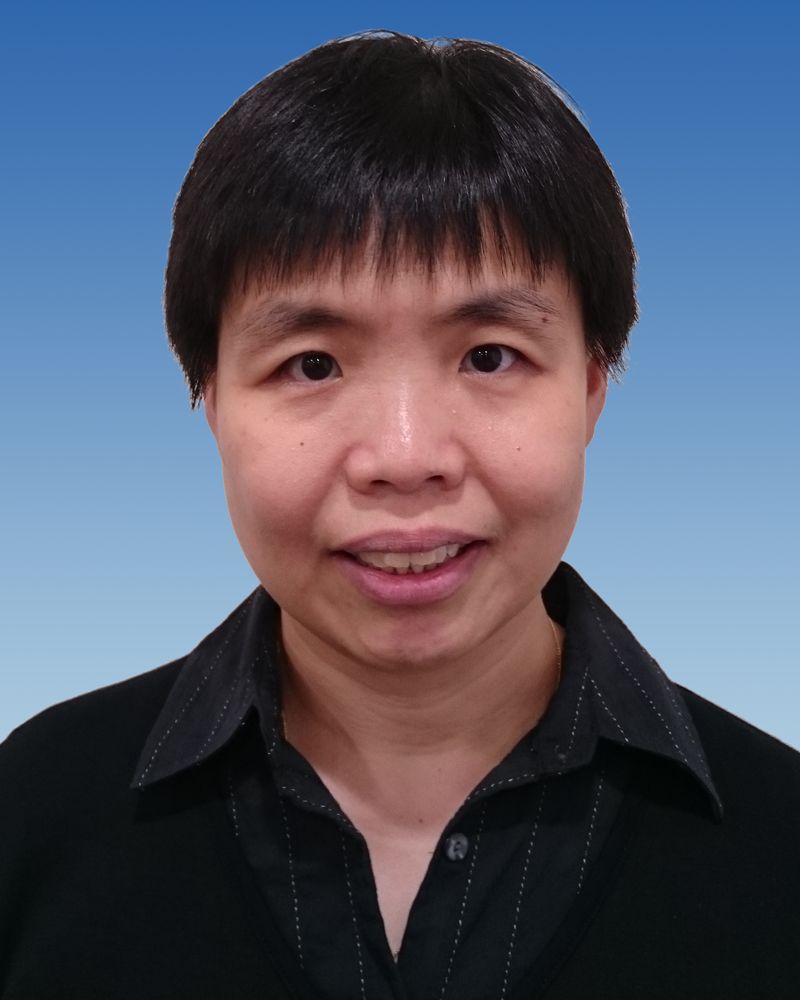
Mdm Wong Lai Fong
School of Science and Technology, Singapore
Singapore
Biography
Wong Lai Fong has been a mathematics teacher almost 30 years and is known for her efforts in engaging students in the learning of Mathematics. She is active in the professional learning of mathematics teachers and constantly seeks opportunities to learn and exchange ideas that help students learn Mathematics better. She is currently teaching in the School of Science and Technology, Singapore.

Mr Ivan Tan
School of Science and Technology, Singapore
Singapore
Mr Andy Chia
School of Science and Technology, Singapore
Singapore
Abstract
The introduction of Artificial Intelligence (AI) into education has potentially ushered in an era of new possibilities for reimagining learning, teaching, and assessment practices. However, it remains unclear how mathematics teachers can fully harness the affordances of these AI-enabled technologies, given their limitations in reliability (e.g., hallucinations) and adaptability for diverse student groups. More importantly, in the case of Mathematics, it is reasonable to worry if the use of AI could lead to enhanced conceptual understanding, procedural fluency, strategic competence, adaptive reasoning, and productive disposition. In this workshop-presentation, we will present a tentative framework for orchestrating AI-enabled learning experiences and use the framework to support teachers in designing, implementing, and reviewing their own AI-enabled mathematics lessons. Participants will first work on a case shared by teachers from the School of Science & Technology, Singapore, followed by a hands-on session to apply the framework to design an AI-enabled mathematics task for their own students.
S/JC2: Integrating AI Literacy into Data Practices in School Mathematics
A/Prof Ng Oi-Lam
Associate Professor
The Chinese University of Hong Kong
Hong Kong
Biography
Oi-Lam Ng is Associate Professor in the Department of Curriculum and Instruction at The Chinese University of Hong Kong. Oi-Lam’s research interests address the new ways of doing, communicating, and representing school mathematics as afforded by technology innovations, e.g. technology-enhanced mathematics learning, constructionist pedagogies, computational thinking education, and multimodality in mathematics discourse. Her interests are rooted in advancing a Papert-inspired conception of “Learning as Making,” and the new opportunities it entails for engaging learners in constructionist practices with emergent technologies (e.g. 3D printing, programming, touchscreen applications, and AI). Her research has been published in top-tier journals in mathematics education, STEM education and educational technology, and she is currently Associate Editor of Digital Experience of Mathematics Education. Her service to the local community includes serving in the Hong Kong Curriculum Development Council–Committee on Mathematics Education.
Abstract
This workshop explores how AI literacy can be authentically embedded in secondary school mathematics through Data Handling and Probability (DHP), where AI concepts naturally intersect with data practices and statistical reasoning. Mathematics classrooms already engage students in collecting, representing, modeling, and interpreting data. This workshop invites educators and researchers to explore how AI literacy can be meaningfully embedded within DHP topics). Through guided discussion and hands-on analysis of classroom examples, participants will reflect on opportunities and challenges in aligning mathematics learning goals with AI literacy. The workshop aims to equip participants with practical design principles and adaptable task structures for implementation in their own contexts.
S/JC3: Some Constructions In A Triangle
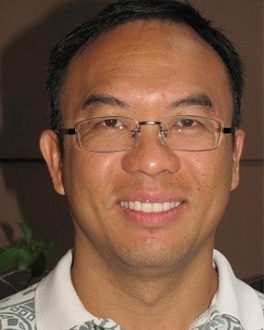
A/Prof Yap Von Bing
National University of Singapore
Singapore
Biography
Dr Yap went to NUS for BSc in Mathematics and MSc in Applied Mathematics, and then got a PhD in Statistics from University of California. He has been teaching at NUS since 2004. His main interests are in the application of statistics to scientific problems, mainly in evolutionary biology and ecology, and the design of lessons in mathematics, statistics and the sciences for pre-university and undergraduate students.
Abstract
In the first part, we will use a ruler to construct several points, including the circumcentre, the orthocentre and the centroid, for some triangles on paper. The patterns will be used to make conjectures that should hold for all triangles. In the second part, we will use the standard Euclidean approach to prove some of the conjectures. The sequence recapitulates the ancient Greek experience: geometry as science before mathematics. I believe it is useful for developing critical thinking skills, which students need in order to work with near-total automation.
S/JC4: Computational Thinking to Artificial Intelligence – Understanding how computers think to make computers seem to think like humans

A/Prof Tay Eng Guan
Mathematics and Mathematics Education Department
National Institute of Education, Nanyang Technological University
Singapore
Biography
Tay Eng Guan is an Associate Professor in the Mathematics and Mathematics Education Academic Group of the National Institute of Education at Nanyang Technological University, Singapore. Dr. Tay obtained his Ph.D. in the area of graph theory from the National University of Singapore. He has continued his research in graph theory and mathematics education and has published in both fields. His areas of research in mathematics education are mathematical problem solving, curriculum development, commognition theory, and computational thinking. Dr Tay has taught in Singapore junior colleges and also served a stint in the Ministry of Education. He was a member of the steering committee for the review of the Singapore Secondary School Mathematics Curriculum and is currently a member of the steering committee for the review of the Junior College curriculum. He co-chaired the Topic Study Group on the Teaching and Learning of Computational Thinking at the 2024 ICME conference in Sydney. He was also a member of the Mathematics Senior Advisory Group for PISA 2021.
Abstract
Computers respond in particular ways to codes. Codes are written by humans who must know what a computer can ‘understand’ and thus ‘instruct’ it accordingly. This is one way we can define (human) Computational Thinking. The apex of this coding process is to come full circle by coding a computer so that it seems to think like a (super)human being. This is one way we can define (computer) Artificial Intelligence. In this workshop, we start at the bottom and use Excel VBA as a platform to learn coding. We will use the Polya-like 4-stage Computational Thinking framework (Decomposition-Abstraction-Algorithmisation-Automation) to guide our learning. We will use Secondary Mathematics topics such as Factors, Compound Interest, and Probability as examples. In the process, we hope that participants will learn coding and how to teach coding as a tool in mathematics classrooms.
Exhibitors
The organising committee appreciates support and participation from potential sponsors/exhibitors.
We expect 300 local teachers (100 primary, 200 secondary and JC).
Thank you.
Opportunities for participation:
| Item | Cost ($) |
|---|---|
|
Exhibition booth: 1 table (4 feet x 2 feet), 2 x chairs |
140 |
|
Full page advertisement* |
800 |
|
Half page advertisement* |
400 |
|
Sponsorship in cash |
Welcome |
|
Sponsorship in kind |
Welcome |
*programme booklet
Note:
Payment needs to reach us by 15 May 2026, and camera-ready advertisement emailed to Dr Ho Weng Kin at wengkin.ho@nie.edu.sg by 15 May 2026.