Keynote 1: Learning, fast and slow: Fostering learner agency with learning sciences-informed AIED

Prof Chen Wenli (LT1)
Professor
National Institute of Education – Learning Sciences & Assessment
Singapore
Biography
Professor CHEN Wenli is the Associate Dean of Office for Research at National Institute of Education (NIE), Nanyang Technological University (NTU) Singapore. She is co-chairing NIE’s Emerging Technologies Strategic Growth Area, and AIED@NIE. She specializes in computer-support collaborative learning (CSCL), multi-modal leanring analytics (MMLA), and human-centered AI for education (AIED). She has been invited as the keynote speaker for many international conferences. She has won a dozen Best Paper Awards from international conferences. The Asia-Pacific Society for Computers in Education presented her with the Distinguished Researcher Award. She received the “Excellence in Research Commendation” “Excellence in Teaching Commendation”, and the “Nanyang Education Award” from NIE/NTU.
Professor Chen serves as the Editor-in-Chief for both the Journal of Computers in Education, and Learning: Research and Practice. She also serves as an Associate Editor for Instructional Science, and Research and Practice in Technology Enhanced Learning.
Professor Chen serves on the Board of Directors of the International Society of the Learning Sciences (ISLS). She also served as co-chair of the CSCL Community Committee of the International Society of the Learning Sciences from 2016 to 2021. She is the executive committee member of the Asia Pacific Society of Computers in Education (APSCE) and the Global Chinese Society of Computers in Education (GCSCE).
Abstract
As AI continues to evolve at an unprecedented pace, the educational landscape is being transformed in ways that challenge traditional learning paradigms. This keynote talk will address the intersection of rapid AI advancements and the nuanced, reflective nature of human learning. It will discuss the distinction between AI for learning and AI for performance, urging AIED designers to prioritize genuine “slower” effortful learning processes over “faster” learning outcomes and solutions.
From a learning science perspective, Prof. Chen Wenli will examine how AI-augmented learning environments can be designed not just as tools for quick answers, but as cognitive partners that enhance human agency, foster self-regulation, critical thinking, and metacognitive skills. Drawing on her empirical research, Prof. Chen will share human-centric AIED designs to enhance their cognitive and regulatory capacities, rather than undermining them. This talk advocates a shift in focus from efficiency (faster) to meaningful learning (slower), highlighting the importance of human learners’ deep cognitive engagement and agency in human-AI collaboration for learning.
Keynote 2: AI and the thinking teacher

Dr. Max Stephens
Faculty of Education
University of Melbourne
Australia
Biography
Professor Max Stephens is an honorary research fellow in the Faculty of Education at The University of Melbourne. He is also Patron of the Mathematical Association of Victoria. He has a long interest in curriculum development and assessment in mathematics at The University of Melbourne, and previously in the Ministry of Education. He is the co-author of a chapter on computational and algorithmic thinking in the Springer Encyclopedia of Mathematics Education. At ICME14In Sydney in 2024, he was a member of the organising team of TSG14 – The teaching and learning of computational thinking – along with Singapore colleagues, Eng Guan Tay and Weng Kin Ho. Together they have a book under way with Springer. Max sees the role of AI in teaching as both helper and disruptor. He believes that the relationship between computational thinking and natural language coding, such as ChatGPT or Deep Seek, is now fundamental to teaching mathematics and to problem solving, allowing coding to be treated as secondary and computational thinking as our primary focus.
Abstract
While educators often discuss the orderly adaptation of AI to the classroom, for example, through access to teaching ideas, adaptive learning and tailored assessment, at the same time AI is having a disruptive effect on the workforce in many countries and on future employment opportunities for today’s students. GenAI is a potential disruptor of teaching and learning in mathematics. Importantly, it shifts what is valued in the teaching and learning, disturbing the traditional role of the teacher as the primary gate keeper of knowledge and leader of instruction. GenAI also provides, not always reliably, an alternative source of mathematical knowledge. How do thinking teachers in primary mathematics classrooms respond to these challenges? Is AI a reason for optimism or a cause of uncertainty and fear?
Keynote 3: Embedding AI Literacy in School Mathematics: Possibilities and Realities
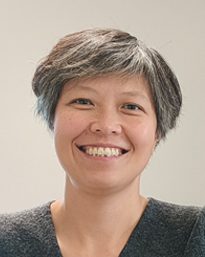
A/Prof Ng Oi-Lam
Associate Professor
The Chinese University of Hong Kong
Hong Kong
Biography
Oi-Lam Ng is Associate Professor in the Department of Curriculum and Instruction at The Chinese University of Hong Kong. Oi-Lam’s research interests address the new ways of doing, communicating, and representing school mathematics as afforded by technology innovations, e.g. technology-enhanced mathematics learning, constructionist pedagogies, computational thinking education, and multimodality in mathematics discourse. Her interests are rooted in advancing a Papert-inspired conception of “Learning as Making,” and the new opportunities it entails for engaging learners in constructionist practices with emergent technologies (e.g. 3D printing, programming, touchscreen applications, and AI). Her research has been published in top-tier journals in mathematics education, STEM education and educational technology, and she is currently Associate Editor of Digital Experience of Mathematics Education. Her service to the local community includes serving in the Hong Kong Curriculum Development Council–Committee on Mathematics Education.
Abstract
Within mathematics education, AI concepts and processes closely intersect with data practices—collecting, representing, modeling, and interpreting data—and with probabilistic/statistical reasoning, making Data Handling and Probability (DHP) a promising locus for authentic learning within AI contexts. This interdisciplinary interconnection opens up educational opportunities for subject-specific enactments, enabling teachers and students to encounter AI concepts meaningfully through mathematical practices. Recent work in statistics education recasts these practices as “data-ing” (Fielding et al., 2025)—a holistic orientation to reasoning with data that emphasizes iteration, sense-making, and communication, not just procedures—providing a useful lens for integrating AI contexts into topics like DHP. In this talk, I first share my ongoing research on developing students’ computational thinking and AI literacy in school mathematics settings. Then, I discuss and propose a rapidly expanding area of inquiry on incorporating data and AI literacy in strengthening the empirical foundation of AI in mathematics education. In doing so, I aim to contribute timely evidence and foster dialogue on the conceptual, methodological, and practical implications in this emerging area.
Keynote 4: Metacognition as a Critical Competency for Mathematical Learning with AI

Dr. Dawn Ng Kit Ee
Mathematics and Mathematics Education Department
National Institute of Education, Nanyang Technological University
Singapore
Biography
NG Kit Ee Dawn is a senior lecturer with the Mathematics and Mathematics Education Academic Group at the National Institute of Education, Nanyang Technological University, Singapore. She holds a PhD in mathematics education from University of Melbourne, Australia. She has received teaching excellence commendation awards from the National Institute of Education and research awards from Mathematics Education Research Group of Australasia and University of Melbourne. Her research interests include the use of real-world tasks (e.g. problems in real-world contexts, applications and mathematical modelling) in the teaching and learning of mathematics, teacher education on metacognition, and assessment literacy of mathematics teachers. Dr Dawn Ng has published in journals, books and conference proceedings to share her research. She also gives talks and work with schools, teachers, teacher educators, and curriculum planners in Singapore and internationally for teacher professional development.
Abstract
Digital platforms designed for teaching and learning increasingly integrate AI for various purposes. Learners are offered personalized learning pathways, tutoring systems with grading and feedback functions, and inclusive and assessable learning tools. Teachers are supported through learning analytics, content generation, adaptive testing, classroom automation, and environments for learner engagement. Although AI can improve efficiency and responsiveness, it does not automatically result in learner’s reflective thinking. The risks of overreliance, misinformation, and reduced cognitive engagement can be apparent in AI-mediated environments when lessons are not thoughtfully designed and learning not monitored. Metacognition is a critical competency for effective mathematical learning in AI-mediated environments towards self-regulated, self-directed learning. Researchers have argued for explicit instruction to activate students’ metacognition during learning. In an AI-mediated environment, such instruction is crucial for augmenting learning and goal attainment, leveraging on the available affordances. This keynote will discuss the role of metacognition in AI-mediated learning environments and explore how teachers can provide opportunities for activation of students’ metacognition.
Keynote 5: Coding without Coding: Generative AI Support for Introductory Statistics
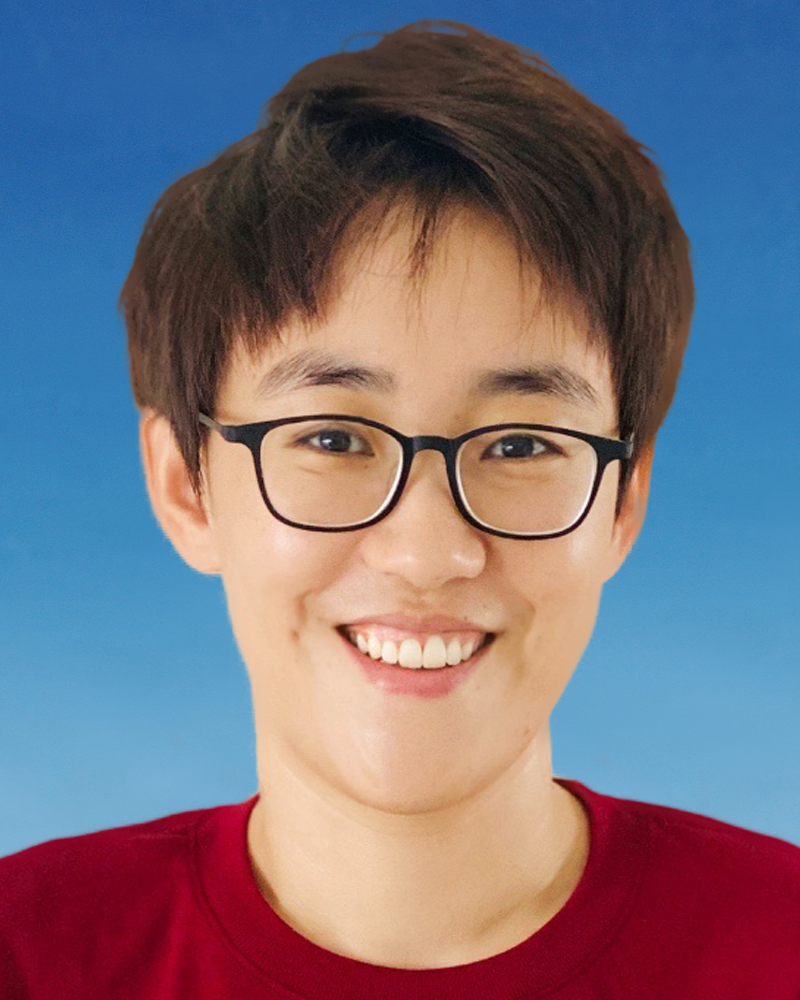
Ast/Prof Zhu Tianming
Mathematics and Mathematics Education Department
National Institute of Education, Nanyang Technological University
Singapore
Biography
Dr. ZHU Tianming received her Ph.D. in Statistics from the National University of Singapore and is currently an Assistant Professor at the National Institute of Education, Nanyang Technological University. Her research focuses on statistical inference for high-dimensional and multivariate functional data, applying AI and data science methods to real-world problems in education, neuroscience, and biomedical research. She is passionate about integrating AI into statistical education, developing innovative teaching approaches, and mentoring students to strengthen analytical and computational skills. She also leads interdisciplinary projects and actively contributes to advancing statistical literacy and AI-driven methodology through collaboration and outreach.
Abstract
In statistics, programming is essential for working with real datasets, particularly for data visualization. Yet in classroom practice, many beginners hit a “syntax wall”, where struggles with code distract them from statistical reasoning and shift focus toward simply fixing errors.
In this talk, I share a classroom implementation of a “coding without coding” approach using generative AI. Students describe their intent in natural language, and the platform generates R or Python code while being deliberately restricted from interpreting results. Even with little or no programming experience, students can create visualizations within minutes, remaining actively engaged in selecting appropriate charts, interpreting outputs, and verifying conclusions. This demonstrates how generative AI can support learning without displacing it, aligning technological possibilities with the realities of teaching and learning in a data-driven world.