S/JC1: AI in Mathematics Teaching: Noticing Potential and Navigating Pitfalls

A/Prof Choy Ban Heng
Mathematics and Mathematics Education Department
National Institute of Education
Nanyang Technological University
Singapore
Biography
Dr Choy Ban Heng, is an Assistant Professor with the Mathematics and Mathematics Education Academic Group at the National Institute of Education, Nanyang Technological University. His research interests lie in the area of developing expertise in mathematics teaching. In particular, he is an expert on mathematics teacher noticing—a central construct of teaching expertise mathematics teaching—and works with teachers in different professional learning settings, such as lesson study, to develop their knowledge and competencies for ambitious mathematics teaching.
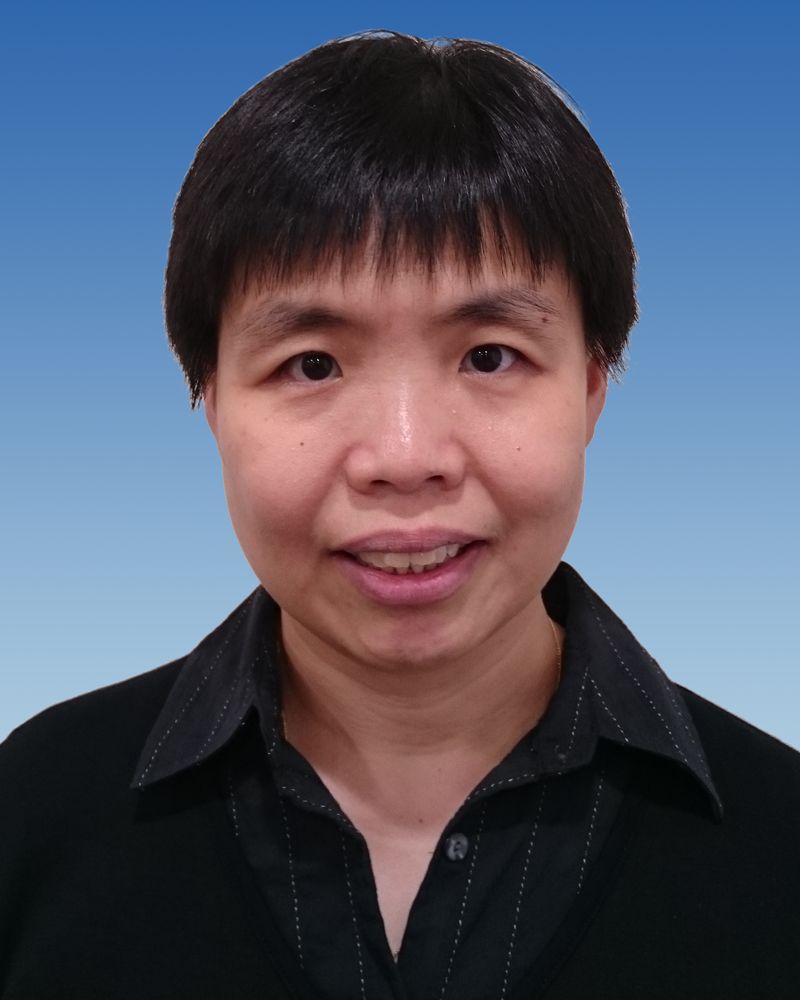
Mdm Wong Lai Fong
School of Science and Technology, Singapore
Singapore
Biography
Wong Lai Fong has been a mathematics teacher almost 30 years and is known for her efforts in engaging students in the learning of Mathematics. She is active in the professional learning of mathematics teachers and constantly seeks opportunities to learn and exchange ideas that help students learn Mathematics better. She is currently teaching in the School of Science and Technology, Singapore.
Mr Ivan Tan
School of Science and Technology, Singapore
Singapore
Mr Andy Chia
School of Science and Technology, Singapore
Singapore
Abstract
The introduction of Artificial Intelligence (AI) into education has potentially ushered in an era of new possibilities for reimagining learning, teaching, and assessment practices. However, it remains unclear how mathematics teachers can fully harness the affordances of these AI-enabled technologies, given their limitations in reliability (e.g., hallucinations) and adaptability for diverse student groups. More importantly, in the case of Mathematics, it is reasonable to worry if the use of AI could lead to enhanced conceptual understanding, procedural fluency, strategic competence, adaptive reasoning, and productive disposition. In this workshop-presentation, we will present a tentative framework for orchestrating AI-enabled learning experiences and use the framework to support teachers in designing, implementing, and reviewing their own AI-enabled mathematics lessons. Participants will first work on a case shared by teachers from the School of Science & Technology, Singapore, followed by a hands-on session to apply the framework to design an AI-enabled mathematics task for their own students.
S/JC3: Some Constructions In A Triangle
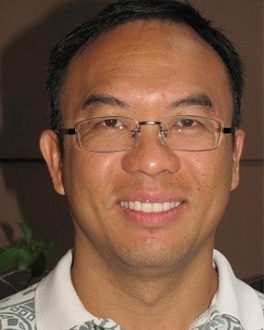
A/Prof Yap Von Bing
National University of Singapore
Singapore
Biography
Dr Yap went to NUS for BSc in Mathematics and MSc in Applied Mathematics, and then got a PhD in Statistics from University of California. He has been teaching at NUS since 2004. His main interests are in the application of statistics to scientific problems, mainly in evolutionary biology and ecology, and the design of lessons in mathematics, statistics and the sciences for pre-university and undergraduate students.
Abstract
In the first part, we will use a ruler to construct several points, including the circumcentre, the orthocentre and the centroid, for some triangles on paper. The patterns will be used to make conjectures that should hold for all triangles. In the second part, we will use the standard Euclidean approach to prove some of the conjectures. The sequence recapitulates the ancient Greek experience: geometry as science before mathematics. I believe it is useful for developing critical thinking skills, which students need in order to work with near-total automation.
S/JC4: Computational Thinking to Artificial Intelligence – Understanding how computers think to make computers seem to think like humans
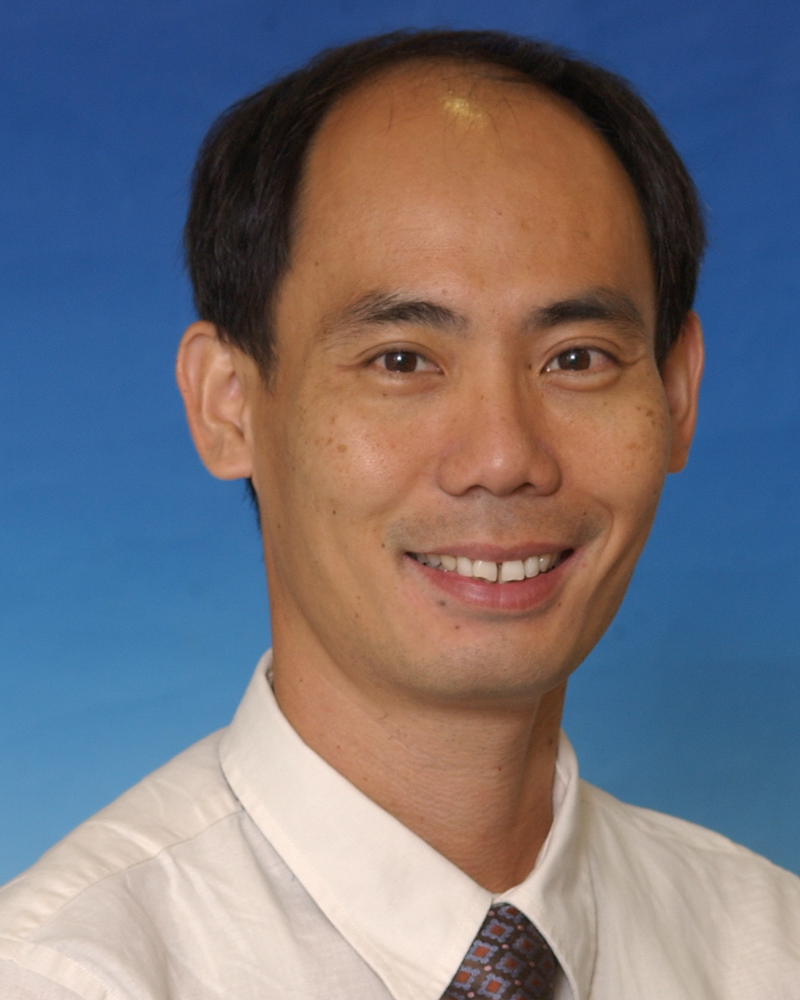
A/Prof Tay Eng Guan
Mathematics and Mathematics Education Department
National Institute of Education, Nanyang Technological University
Singapore
Biography
Tay Eng Guan is an Associate Professor in the Mathematics and Mathematics Education Academic Group of the National Institute of Education at Nanyang Technological University, Singapore. Dr. Tay obtained his Ph.D. in the area of graph theory from the National University of Singapore. He has continued his research in graph theory and mathematics education and has published in both fields. His areas of research in mathematics education are mathematical problem solving, curriculum development, commognition theory, and computational thinking. Dr Tay has taught in Singapore junior colleges and also served a stint in the Ministry of Education. He was a member of the steering committee for the review of the Singapore Secondary School Mathematics Curriculum and is currently a member of the steering committee for the review of the Junior College curriculum. He co-chaired the Topic Study Group on the Teaching and Learning of Computational Thinking at the 2024 ICME conference in Sydney. He was also a member of the Mathematics Senior Advisory Group for PISA 2021.
Abstract
Computers respond in particular ways to codes. Codes are written by humans who must know what a computer can ‘understand’ and thus ‘instruct’ it accordingly. This is one way we can define (human) Computational Thinking. The apex of this coding process is to come full circle by coding a computer so that it seems to think like a (super)human being. This is one way we can define (computer) Artificial Intelligence. In this workshop, we start at the bottom and use Excel VBA as a platform to learn coding. We will use the Polya-like 4-stage Computational Thinking framework (Decomposition-Abstraction-Algorithmisation-Automation) to guide our learning. We will use Secondary Mathematics topics such as Factors, Compound Interest, and Probability as examples. In the process, we hope that participants will learn coding and how to teach coding as a tool in mathematics classrooms.